Sunderland Greyhound Stadium Speedway — The 1964–1974 Chapter
Best Horse Racing Betting Sites – Bet on Horse Racing in 2026
 Available in US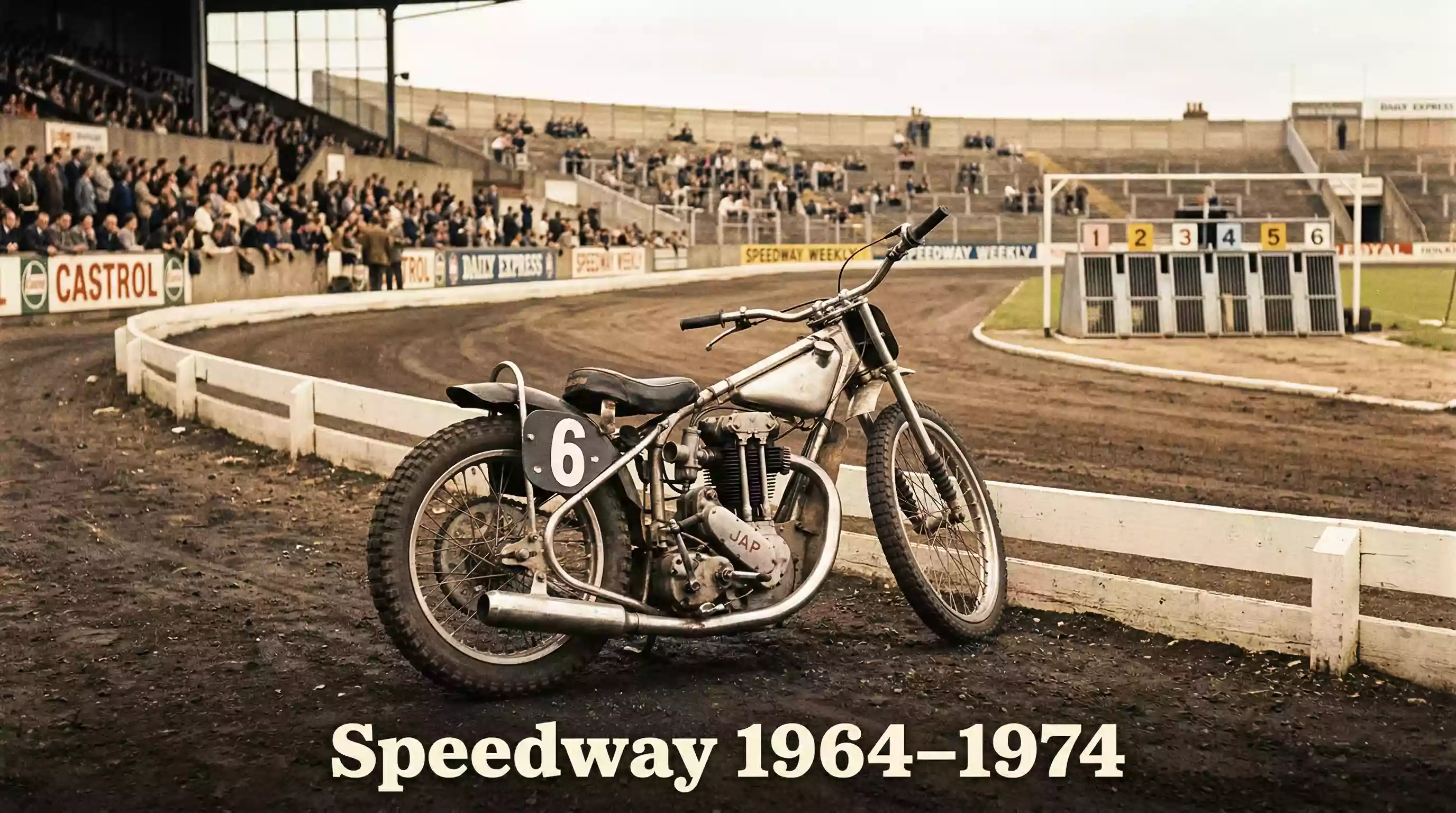
For a decade between 1964 and 1974, Sunderland greyhound stadium was not just a greyhound track. It was also a speedway venue — home to three different motorcycle racing teams across ten years of dual-use operation. The stadium on Sunderland Road, built in 1940 for £60,000 and designed exclusively for greyhound racing, found itself hosting a second sport that drew crowds the dogs could no longer match on their own.
The speedway chapter is a footnote in the stadium’s eighty-six-year history, but it is a revealing one. It shows a venue adapting to economic pressure by diversifying its product — a strategy that has echoes in the modern era’s restaurant packages, corporate events and leisure-first approach. The teams that raced there are largely forgotten outside specialist speedway circles, but the story of how and why they came to Sunderland illuminates the kind of commercial flexibility that has kept the stadium alive where hundreds of others have failed.
The Saints, The Stars and The Gladiators
The Sunderland Saints were the first speedway team to race at the stadium, launching in 1964. Their arrival coincided with a period of decline in greyhound-only attendance across the north-east, and the stadium’s management saw motorcycle racing as a way to fill empty dates and attract a different audience. The Saints raced in the lower tiers of British speedway, competing against teams from other northern industrial towns in a league structure that mirrored the sport’s working-class roots.
The initial reception was encouraging. In 1964, a speedway meeting at Sunderland drew approximately 6,500 spectators — a figure that dwarfed anything the greyhound card was pulling on a routine Friday night. That gap between speedway crowds and greyhound crowds made the financial case for dual-use operation difficult to argue against. The dogs brought steady, reliable revenue through the week; the speedway brought occasional spikes of crowd-driven income that lifted the stadium’s overall turnover.
The Saints gave way to the Sunderland Stars in the early 1970s. The name change reflected a common pattern in lower-league speedway: teams rebranded as they moved between competition tiers, changed promoters, or sought a fresh identity after a disappointing season. The Stars competed in the second division of British speedway, racing on a shale track laid inside the greyhound circuit. Their riders were journeymen — competent professionals rather than national stars — and the competition was local in character, drawing fans from across Tyne and Wear rather than from the wider region.
The final incarnation was the Sunderland Gladiators, who carried the stadium’s speedway flag through the last years of the dual-use era. By this point, the novelty of speedway at Sunderland had worn thin, and the crowds that had once filled the terraces had dwindled. The Gladiators operated on tighter margins than their predecessors, and the economics of staging two different sports at the same venue were becoming harder to justify.
All three teams shared the same physical space — the tighter oval inside the greyhound track — and all three drew from the same pool of north-east speedway fans. Their collective legacy is not a trophy cabinet or a record of sporting achievement but a demonstration that Sunderland greyhound stadium was never just a single-purpose venue. It was, and remains, a business that adapts to survive.
Speedway and Greyhound Racing Side by Side
Running two motorsport disciplines from the same venue required careful logistics. The greyhound track — sand surface, six-lane traps, timing equipment, hare rail — occupied the outer circuit. The speedway track — a smaller oval of compacted shale or dirt — sat inside it, using the same bends but a tighter radius. The two surfaces could not coexist simultaneously; switching between them meant preparing the inner track before a speedway meeting and restoring the greyhound circuit afterward.
Scheduling was the primary constraint. Greyhound meetings ran on their established weekly pattern — evening sessions on open nights, daytime BAGS meetings during the week. Speedway needed its own dates, typically weekend afternoons or early evenings that did not clash with the greyhound card. The two sports could not share a night, because the track surface preparation took hours and the logistics of managing two different sets of equipment, officials and spectators on the same evening were impractical.
The physical demands on the track were considerable. The greyhound sand surface required consistent depth, compaction and moisture levels to produce fair racing. Speedway riders tearing around a shale track fifty metres inward created vibration, debris and wear patterns that could affect the outer surface. The groundstaff managed these interactions as best they could, but the compromise was real: neither sport got a perfectly dedicated venue, and the maintenance budget had to stretch across two surfaces instead of one.
For the spectators, the dual-use arrangement offered variety. A family that attended speedway on a Saturday afternoon might return for greyhound racing on a Friday evening. The cross-pollination was modest — the two sports attracted overlapping but not identical audiences — but it kept the stadium visible in the local leisure calendar across more days of the week than greyhound racing alone could manage.
The financial model was simple in concept: two revenue streams from one asset. The speedway fixtures generated gate receipts, programme sales and a small amount of on-course betting activity. The greyhound programme continued to generate its own income through the established channels. The combined operation gave the stadium a wider base than either sport alone could provide — useful insurance during a period when greyhound attendance nationally was declining and tracks were closing at a rate of roughly two per year.
See also Sunderland Greyhound Trap Stats.
Why Speedway Left
Speedway left Sunderland in 1974, a decade after it arrived. The departure was not dramatic — no single event ended it — but rather the accumulation of economic pressures that made continuation unviable. Crowds had fallen from the 6,500 peak of 1964 to levels that no longer covered the costs of staging meetings. The lower divisions of British speedway were precarious at the best of times, and Sunderland was not the only venue to lose its team during this period.
The broader speedway landscape was shrinking too. Across Britain, smaller speedway venues were closing or losing their teams as the sport consolidated around a smaller number of higher-profile circuits. Sunderland’s greyhound stadium was never the ideal home for motorcycle racing — the track was a compromise from the start, the surface was shared, and the stadium had been designed for dogs, not bikes. When the economics tipped, there was no compelling reason to fight for a sport that had always been a tenant rather than a co-owner.
After 1974, the stadium reverted to greyhound-only operation and has remained so ever since. The speedway track was removed, the inner area returned to its previous state, and the focus shifted entirely back to the sport the venue was built for. No physical trace of the speedway decade remains visible to today’s visitors.
The speedway chapter matters not because it was glorious — it was not, by any reasonable sporting measure — but because it illustrates a principle that has governed Sunderland greyhound stadium for its entire existence: do whatever it takes to keep the gates open. In the 1960s, that meant hosting motorcycles. In the 2000s, it meant selling to William Hill. In the 2010s, it meant joining ARC. In the 2020s, it means restaurant packages and Category One events. The product changes; the survival instinct does not. Sunderland Greyhound Stadium Speedway — More on this topic at sunderland greyhound results.
