ARC Grand Prix Sunderland — Race History, Prize Money & Past Winners
Best Horse Racing Betting Sites – Bet on Horse Racing in 2026
 Available in US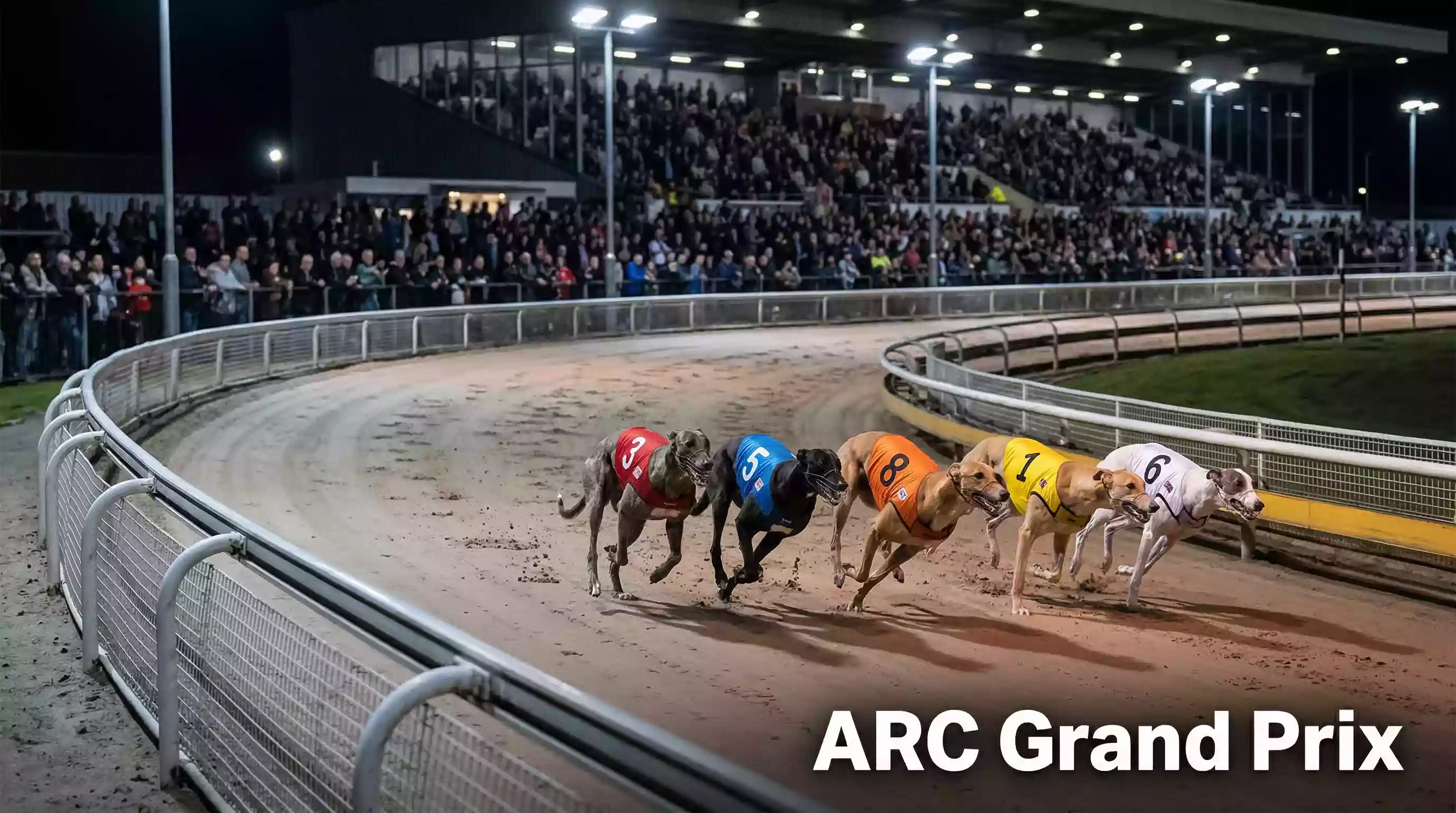
The ARC Grand Prix is Sunderland’s flagship 640-metre event, carrying a winner’s purse of £12,500 and a Category One designation from the GBGB. It is the middle-distance counterpart to the Premier Classic’s 450-metre showcase — and for many who follow the track, it is the more dramatic competition. The 640-metre distance at Sunderland tests stamina as well as speed, rewards tactical racing as much as raw pace, and has been the setting for some of the most memorable performances in the stadium’s modern history.
The Grand Prix is also the race that produced the current track record. On Good Friday 2025, New Destiny ran 38.79 seconds to break a mark that had stood since 2022. That single performance elevated the ARC Grand Prix from a prestigious regional event to a national talking point — and cemented the 640-metre distance at Sunderland as a serious proving ground for middle-distance greyhounds in the UK.
Race Format and the 640m Challenge
The 640-metre distance at Sunderland involves approximately one and two-thirds laps of the 379-metre circuit. Dogs break from the traps with an 84-metre run-up to the first bend — slightly shorter than the 93 metres available on the 450-metre trip — which means the early pace is compressed and the first-bend battle is tighter. After the first bend, the race develops through a full circuit and then continues for an additional straight and bend before the finishing run. It is substantially longer than the standard 450-metre race and demands a different physical profile.
Where 450-metre racing rewards speed and trap speed — get to the front quickly, hold on — 640 metres rewards pacing and endurance. A dog that blazes to the front over 450 metres might run out of petrol at 640. A dog that closes late over 450 metres might find the extra distance is exactly what it needs to run down the leaders. The tactical dimension is more pronounced: the field has more time to sort itself out, more bends to navigate, and more opportunities for positional changes. The result is often more uncertain going into the final straight, which is what makes the distance compelling for both spectators and form students.
The Grand Prix format follows the standard Category One structure: heats over multiple meetings, semi-finals, and a final staged on a premier Friday night. Dogs qualify on time and performance, and the entry list typically features the strongest 640-metre performers from across the north-east and beyond. Visiting dogs from other ARC tracks — Newcastle, Nottingham, Swindon — are common entrants, which broadens the competition and makes the form data from Grand Prix heats particularly valuable for cross-track comparison.
The previous track record over 640 metres was held by Coolavanny Aunty, set in April 2022. Breaking a track record that has stood for three years in a Category One final elevates the achievement — it is not just a fast time on a quiet afternoon but a performance delivered under maximum competitive pressure.
The 2025 Edition — New Destiny’s Record Run
Good Friday, 18 April 2025. The ARC Grand Prix final at Sunderland greyhound stadium. New Destiny broke from the traps and ran 38.79 seconds to win the race and obliterate the 640-metre track record. The previous best, held by Coolavanny Aunty, had survived three years of competition. New Destiny dismantled it on the biggest night of the Sunderland calendar.
The performance was notable not just for the time but for the manner. A record run in a Category One final requires more than raw ability — it requires composure under pressure, a clean run through the bends, and the sustained effort that 640 metres demands. Dogs running close to their maximum in heat rounds may not reproduce that effort in a final, where the intensity of the field and the atmosphere are different. New Destiny found more, not less, when it mattered most.
The 2025 victory was all the more remarkable considering the event’s 2024 edition, when part-time trainer Richard Wales had won with Farneys Willie — just weeks after obtaining his GBGB licence. Wales described the Grand Prix victory as the best experience of his career. In 2025, champion trainer Mark Wallis continued that tradition of excellence with New Destiny’s record-breaking run. The Grand Prix consistently produces moments that confirm its place as one of the premier middle-distance events in UK greyhound racing.
The 2025 edition also highlighted the quality depth within the ARC Grand Prix. The heat rounds produced several performances that would have been noteworthy in isolation — fast times, clean runs, competitive finishes. The standard of racing across the entire competition, not just the final, confirmed the event’s status as one of the premier middle-distance tests in UK greyhound racing.
See also Greyhound Early Pace vs Late Pace.
Grand Prix Through the Years
The ARC Grand Prix at Sunderland has grown in stature since Arena Racing Company took ownership of the stadium in 2017. Under ARC, the event received the Category One designation, the prize money was elevated to £12,500, and the marketing and broadcast coverage were upgraded to match the competition’s ambitions. The Grand Prix is now part of ARC’s broader greyhound event strategy — a portfolio of high-profile competitions staged across the company’s five greyhound venues, designed to raise the profile of the sport and attract new audiences.
Before ARC, Sunderland hosted competitive 640-metre races, but the Grand Prix in its current form — with its prize structure, Category One status and national entry list — is a product of the ARC era. The evolution mirrors what has happened across the group: investment in events as a way to drive attendance, generate media interest and differentiate ARC’s greyhound tracks from the rest of the licensed network.
The Grand Prix’s position in the annual calendar gives it a distinct identity. Held on or around Easter weekend, it occupies a slot that carries its own significance — a holiday fixture with heightened public attention and a larger-than-usual audience for greyhound racing. The Good Friday timing of the 2025 final was no accident: holiday weekends draw casual visitors as well as regulars, and the Grand Prix is designed to be accessible to both.
Looking ahead, the ARC Grand Prix Sunderland is likely to remain the centrepiece of the track’s 640-metre programme. The record set by New Destiny in 2025 gives future editions a benchmark to aim at — and the knowledge that the track is capable of producing nationally significant performances over the distance. For a stadium that has been racing since 1940, the Grand Prix represents the modern chapter of a very old story: still competitive, still producing moments that matter, still very much alive.
The event also contributes to Sunderland’s broader form database. Grand Prix heat times, running styles and trap performances at 640 metres become reference points for the rest of the season’s middle-distance racing. A dog that qualified comfortably for the Grand Prix semi-finals but did not reach the final will carry that form into subsequent 640-metre races on open nights and BAGS cards, where it may be significantly stronger than the regular middle-distance field. The ripple effect of a Category One competition extends well beyond the final night itself. ARC Grand Prix Sunderland — More on this topic at sunderland greyhound results.
