Arena Racing Company and Sunderland — Ownership, Operations & What ARC Means for the Track
Best Horse Racing Betting Sites – Bet on Horse Racing in 2026
 Available in US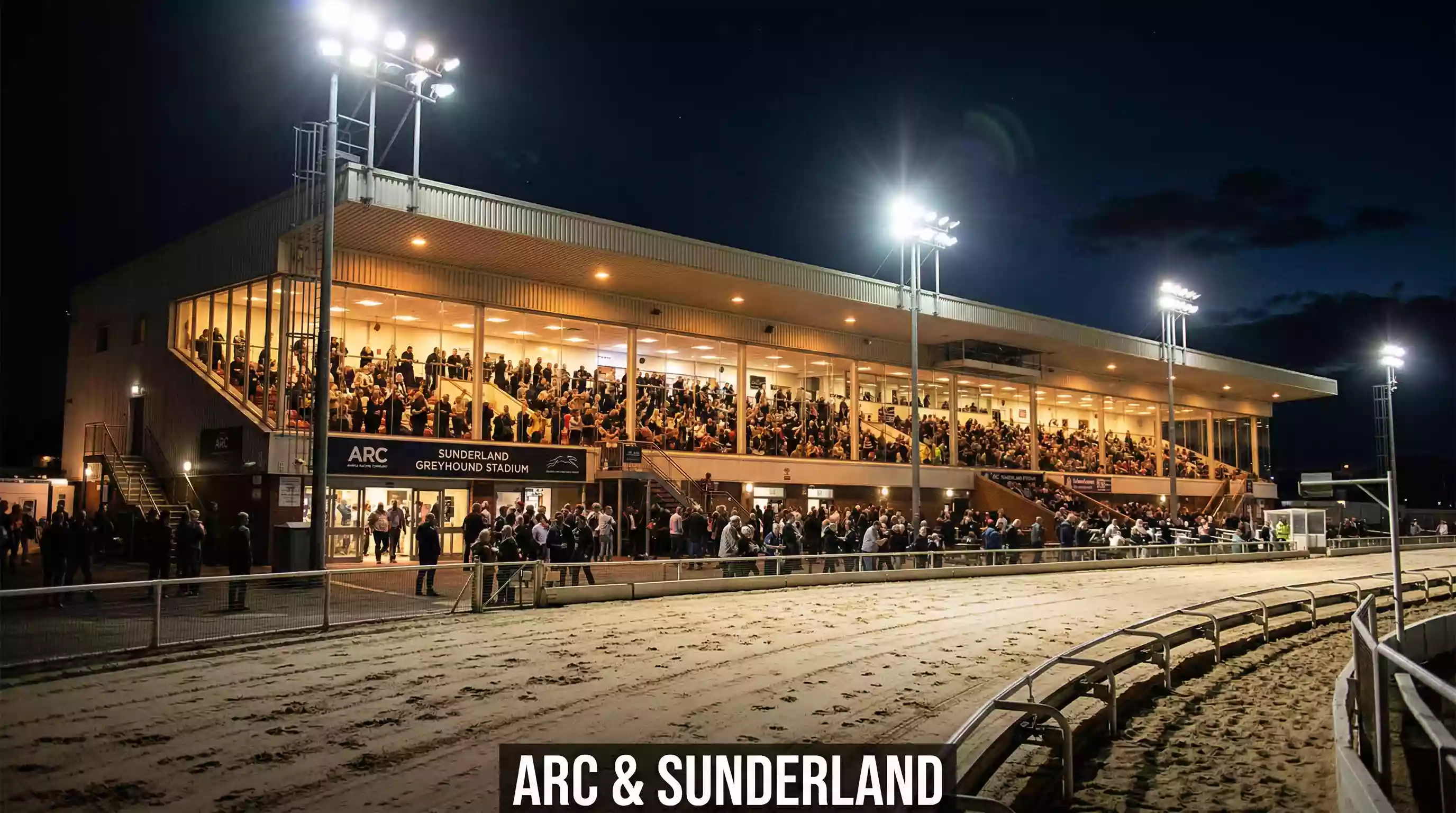
Arena Racing Company acquired Sunderland and Newcastle greyhound stadiums from William Hill in May 2017. The deal brought both north-east tracks into the UK’s largest commercial racing operator — a company that already controlled sixteen horse racecourses and was building a greyhound division to match. For Sunderland, the change of ownership meant access to investment, marketing infrastructure and a media distribution network that a standalone stadium could not have sustained on its own.
ARC’s influence on Sunderland has been tangible. Attendance figures have grown, restaurant bookings have increased, and the stadium now hosts two Category One events — the highest tier in the GBGB competition calendar. Whether ARC’s model is the answer to greyhound racing’s long-term challenges is a different question, but the short-term effect on Sunderland has been measurable and broadly positive.
ARC’s Portfolio — Scale and Scope
ARC operates sixteen horse racecourses and five greyhound stadiums across England, making it the largest venue-based racing operator in the country. The horse racing portfolio includes well-known courses such as Doncaster, Lingfield Park, Wolverhampton and Windsor. The greyhound division covers Sunderland, Newcastle, Nottingham (Colwick Park), Swindon and Wolverhampton (Dunstall Park). Together, these venues generate a substantial share of all live racing content broadcast into UK betting shops.
The business model is built on scale. A single company controlling twenty-one racing venues can negotiate media rights collectively, share marketing resources, centralise operational costs and run cross-venue promotions that independent stadiums cannot match. ARC’s media partnerships, in particular, give its tracks guaranteed broadcast coverage — which in the greyhound world translates directly into BAGS contracts and the betting-shop revenue those contracts generate.
The greyhound side of the business is newer than the horse racing operation. ARC’s greyhound expansion began in earnest with the 2017 William Hill acquisition, which brought Sunderland and Newcastle into the fold. Further investments followed. Dunstall Park in Wolverhampton — the first purpose-built greyhound stadium in the UK for over a decade — became a flagship for ARC’s vision of what a modern greyhound venue should look like: integrated hospitality, dedicated media facilities and a track designed for broadcast as much as for spectators. Its opening signalled that ARC saw greyhound racing not as a declining asset to manage, but as a product category worth developing.
The ARC-GMG five-year content deal, which started in January 2025, illustrates the scale of the media operation. Under the agreement, races from ARC’s greyhound tracks are distributed through TRP and Premier Greyhound Racing, covering fifteen fixtures per week. That is fifteen evenings or afternoons of live racing content flowing into bookmakers’ shops and online platforms, funded by the betting market and anchored by the ARC brand.
For context, ARC’s five greyhound stadia account for a significant fraction of all BAGS fixtures staged nationally each week. The company’s position at the negotiating table is not just about the number of venues — it is about the volume and regularity of content those venues produce. A five-day-a-week operation at Sunderland, multiplied across the group, gives ARC a content pipeline that few competitors can replicate.
What ARC Changed at Sunderland
Before ARC, Sunderland was a William Hill property — one of a small number of greyhound stadiums owned directly by a bookmaker. William Hill had bought the stadium for £9.4 million in 2002, making it the first greyhound venue to be acquired by a national bookmaker. The investment was primarily about securing betting content rather than developing the stadium as a leisure destination, and while the track remained operational and well-maintained, the hospitality and marketing side of the business was not a priority.
ARC’s approach has been different. The company treats its greyhound venues as leisure and entertainment businesses first, with betting as one component of the experience rather than the sole driver. At Sunderland, this has meant upgrades to the restaurant offer, more aggressive marketing of night-out packages, and a push to grow the non-betting audience — families, corporate groups, birthday parties, stag and hen nights.
The results have shown up in the data. Across ARC’s greyhound stadiums, overall footfall grew by five percent in 2025 compared to the previous year. The ARC “Back On Track” campaign in October 2025 — which offered 25 percent discounts on all dining packages — drove a 33 percent increase in online bookings and a 28 percent rise in restaurant bookings across the group. At Newcastle, the All England Cup final saw attendance jump by 85 percent. Sunderland, as part of the same north-east cluster, benefited from the same marketing push and shared infrastructure.
Sarah Newman, ARC’s Marketing and Communications Manager, noted that competition for the leisure pound has never been higher, and that growing footfall in that environment is a meaningful achievement. It requires sustained investment in product, pricing and promotion — exactly the kind of centralised effort that a group operator can deliver but an independent stadium typically cannot.
See also Sunderland Greyhound Results Today.
Media Rights and How Races Reach Bettors
The economic engine behind ARC’s greyhound operation — and behind every licensed greyhound stadium in Britain — is media rights. Races staged at Sunderland are not just events for the people in the stands. They are broadcast content, distributed to thousands of betting shops and millions of online accounts through a layered media ecosystem.
Two companies dominate greyhound broadcasting in the UK: SIS (Satellite Information Services) and TRP (The Racing Partnership). SIS has historically been the larger of the two, covering the majority of BAGS meetings and supplying content to the on-course and off-course betting markets. TRP entered the market more recently and has built its share through content deals with operators like ARC.
Premier Greyhound Racing (PGR) is the broadcast brand for the top tier of ARC’s greyhound content — the open-racing nights, Category One events and feature meetings that attract the most betting interest. PGR coverage is distributed through TRP’s network and carries a premium within the betting shop environment: better camera angles, more detailed commentary, and higher production values than a standard BAGS broadcast.
For Sunderland, this media structure means that every race — whether a Monday afternoon BAGS card or a Friday night Category One heat — reaches the betting market in real time. The live pictures drive in-play betting, the results feed into price-comparison and form-data services, and the post-race data is archived by platforms like Sporting Life, Timeform and Racing Post. The practical effect is that Sunderland’s results are available to anyone, anywhere in Britain, within seconds of the dogs crossing the line.
The commercial value of this distribution is what makes the five-fixture-a-week schedule viable. Without the media rights income that flows back from bookmakers through BAGS contracts and broadcast fees, Sunderland would struggle to fund the staffing, prize money and maintenance costs of running sixty-plus races a week. ARC’s scale gives the stadium access to better deals, more coverage and a stronger negotiating position than it would have as an independent venue — which is, in the end, the fundamental argument for group ownership in a sport that relies on broadcast revenue to survive.
Whether that model is sustainable over the next decade depends on factors ARC cannot fully control: the future of the voluntary bookmaker levy, the regulatory environment, the trajectory of greyhound attendance nationally and the appetite of the betting market for greyhound content. What is clear right now is that Arena Racing Company Sunderland is a different proposition from the independent stadium of two decades ago — better funded, better marketed and more tightly integrated into the commercial ecosystem that keeps UK greyhound racing alive. Arena Racing Company and Sunderland — More on this topic at sunderland greyhound results.
