Greyhound Early Pace vs Late Pace — How Running Style Decides Races
Best Horse Racing Betting Sites – Bet on Horse Racing in 2026
 Available in US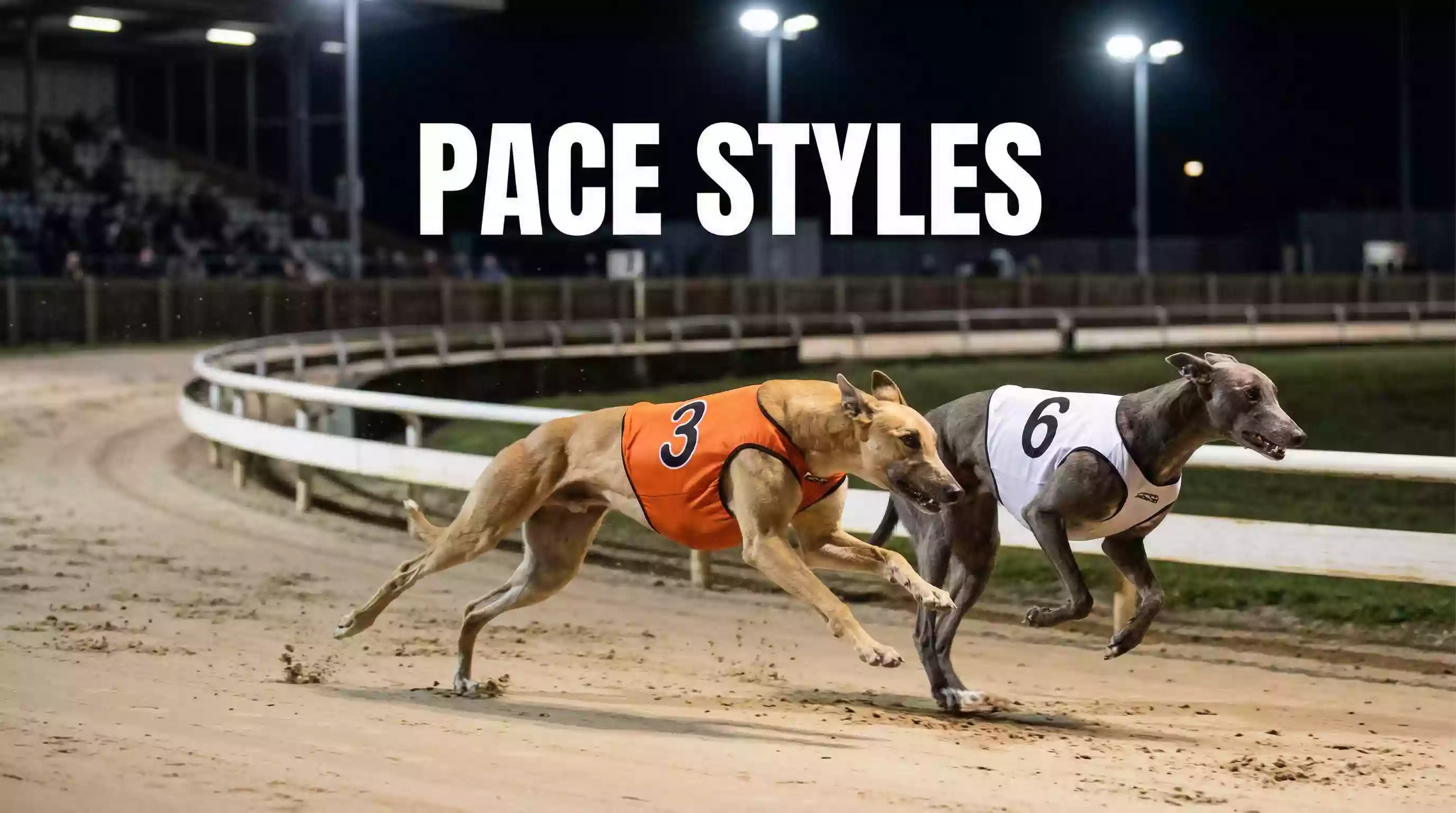
Some greyhounds explode from the traps, reach the first bend in front, and try to hold every rival at bay until the line. Others break modestly, settle behind the pace, and close with a sustained run through the final straight. These two archetypes — the early-pace front-runner and the late-pace closer — are the fundamental categories of running style in greyhound racing, and identifying which style a dog runs is one of the most practical skills a form reader can develop.
Running style is not a fixed trait in the way that colour or breed is fixed, but it is persistent. A dog that shows early pace in four of its last six runs is, for practical purposes, an early-pace dog. Its in-running comments will be full of EP, SLd, Led1. A dog that consistently finishes strongly but starts slowly will carry comments like MsPace, RnOn, FinWell. The form tells you the story — you just need to know which words to read.
Early Pace — The Front-Runner Profile
Early-pace dogs win the most races. The reason is structural: a greyhound that reaches the first bend in front avoids the crowding, bumping and checking that catch dogs further back in the field. It races in clear air, takes the shortest route around the bends, and forces every rival to make up ground from behind. In a sport where trouble at the bends is the single biggest disruptor of form, avoiding that trouble by leading is an enormous advantage.
At Sunderland, the 93-metre run-up on the 450-metre distance gives early-pace dogs a reasonable stretch to build speed before the bend arrives. That run-up rewards sharp trap exits — dogs marked QAw (Quick Away) or VQAw (Very Quick Away) — and penalises slow breakers who cannot recover the lost ground before the field compresses at the turn. The 261-metre sprint is even more extreme: the short distance means there are fewer bends and less time for closers to make up ground, so early pace is close to essential for winning.
Trap draw is critical for front-runners. An early-pace dog drawn in Trap 1 has the shortest route to the rail and the most protected approach to the first bend. The same dog drawn in Trap 6 has to cover more ground laterally while maintaining its forward speed, and it risks being cut off by rivals breaking inward from the middle traps. This is one reason why Trap 1 shows an elevated national win rate of 18 to 19 percent — it favours the dogs that are most likely to win anyway, and the seeding system places early-pace dogs there deliberately.
The weakness of the early-pace profile is stamina. A dog that expends maximum energy in the first 150 metres may not have enough left for the final 100. Over 450 metres, this is sometimes manageable — the distance is short enough for a fast dog to hold on. Over 640 or 828 metres, the front-runner profile becomes riskier. A dog that leads for a full lap and then gets caught on the final bend has done the hard work for no reward, and its form will show a pattern of leading early and fading late.
Late Pace — The Closer Profile
Closers operate on the opposite logic. They sacrifice early position — sometimes deliberately, sometimes because their natural trap speed is below the field average — and rely on sustained pace through the second half of the race to overhaul tiring leaders. The closer’s weapon is not raw speed but endurance and the ability to accelerate when other dogs are decelerating.
The 640-metre distance at Sunderland is where closers come into their own. The extra lap gives them more track to work with, more bends where the leaders may lose momentum, and a longer final straight to make their move. When New Destiny set the 640-metre track record of 38.79 seconds in the 2025 ARC Grand Prix, the performance demonstrated what elite middle-distance running looks like at this track — sustained effort across the full journey, with no wasted energy in the early stages.
Closers benefit from troubled races. When the early pace is contested — two or three front-runners scrapping for the lead at the first bend — the congestion and interference slows the entire front group. A closer sitting two or three lengths behind in clean air is unaffected by the trouble and arrives at the final bend with reserves the leaders have already spent. Handicapping a race by predicting the degree of early-pace congestion is one of the more sophisticated form-reading techniques, and closers are the primary beneficiaries when the prediction is correct.
The risk for closers is a slow, uncontested pace. If a single front-runner leads without pressure, it conserves energy, runs the bends efficiently, and arrives at the final straight with enough in reserve to hold off the late challenge. A closer that sits behind an easy leader and then finds the leader still going away in the final hundred metres has had its race plan undone by the lack of early competition. Reading the pace dynamics before the race — rather than watching them unfold — is essential for assessing whether a closer’s style will be rewarded.
See also Outside McGee Hare System.
Pace Maps and Race Shape
A pace map is a pre-race prediction of how the race will unfold, constructed from the trap draws and running-style profiles of each dog in the field. It is not a formal product — you will not find it on the racecard — but it is what experienced form readers build mentally before every race, and it is the framework that turns individual dog assessments into a prediction of the race as a whole.
Start with the trap draw. Identify which dogs show early pace in their form. Plot them on the traps: if two front-runners are drawn in Traps 1 and 2, they will likely contest the lead at the first bend. If a front-runner is drawn in Trap 5, it may attempt to cross the field to reach the rail — which creates chaos and benefits closers sitting in Traps 3 and 4.
Then assess the strength of the early pace. One dominant front-runner with no challenger will likely lead unchallenged — bad for closers. Three front-runners fighting for position creates congestion — good for closers. The ideal scenario for a closing dog is a race where two or more rivals burn each other out in the first 200 metres and leave the closer with a clear run through the tiring field.
Distance interacts with the pace map. Over 261 metres at Sunderland, the pace map is simple: whoever breaks fastest wins, because there is not enough track for anything else to happen. Over 450 metres, the pace map becomes meaningful — the balance between early and late pace can determine the result. Over 640 and 828 metres, the pace map is critical, because the longer distance magnifies every positional advantage and disadvantage that the early pace creates.
Building pace maps takes practice, but the underlying data is all in the form. The last six runs, the in-running comments, the trap draw, the distance — put them together, and the race starts to reveal its shape before the traps open. You will not get it right every time. But you will get it right more often than someone who treats every race as a random event, and in greyhound racing, that edge is worth having. Greyhound Early Pace vs Late Pace — More on this topic at sunderland greyhound results.
