Outside McGee Hare System — How It Shapes Racing at Sunderland
Best Horse Racing Betting Sites – Bet on Horse Racing in 2026
 Available in US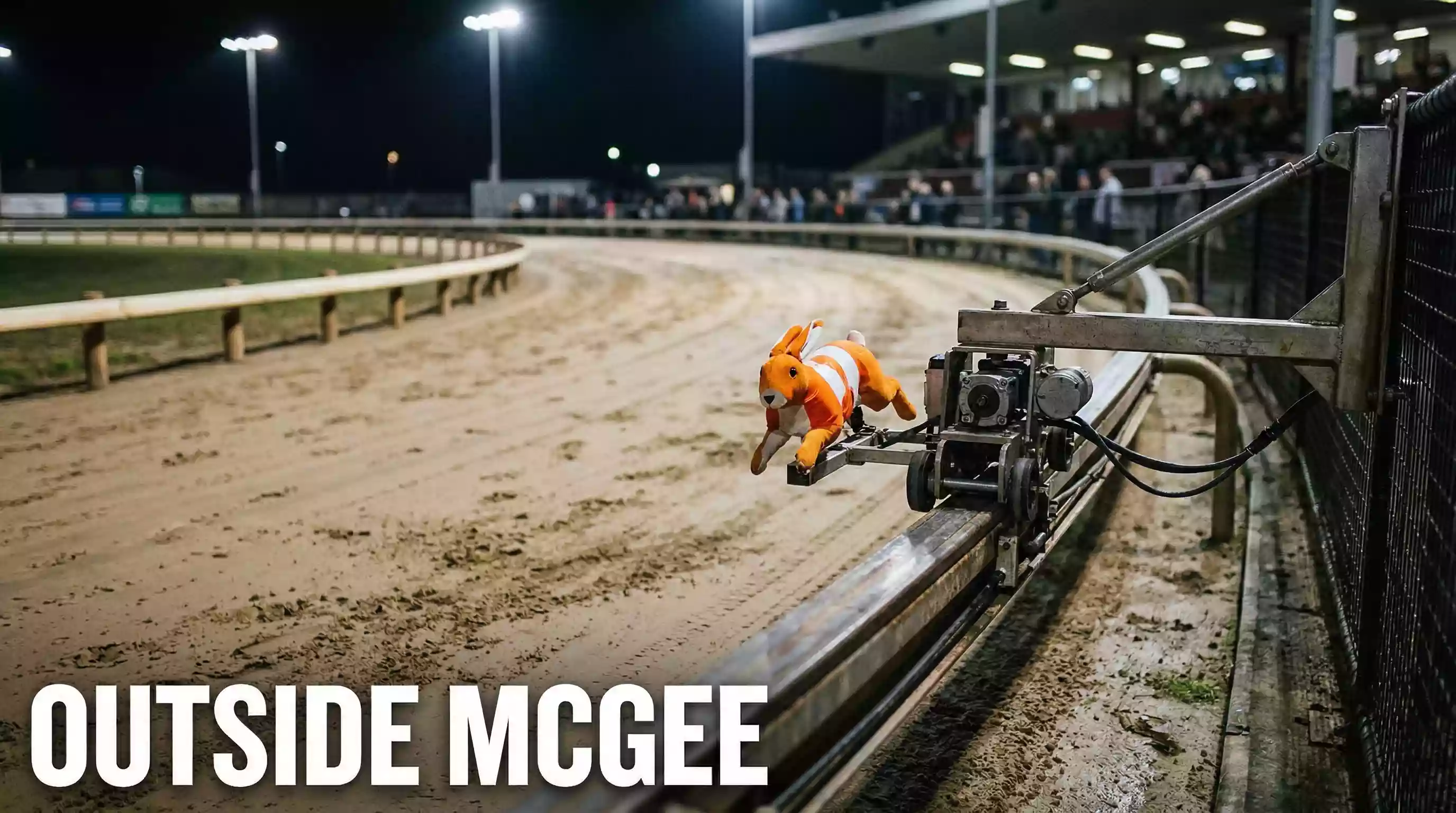
Sunderland greyhound stadium uses the Outside McGee hare — a mechanical lure that runs on a rail mounted along the outer circumference of the track. It is a detail that sounds trivial until you understand what it does to the racing. The position of the hare changes where the dogs look, how they approach the bends, which running lines they favour, and — critically — which trap positions carry an advantage. If you are reading Sunderland results without accounting for the hare type, you are missing a variable that affects every race at the track.
Not all UK greyhound stadiums use the same hare system. Some run inside hares, some run outside hares, and the brand of hare (McGee, Swaffham, or other manufacturers) determines the mechanical specifics. The Outside McGee at Sunderland is one of the most distinctive configurations on the circuit, and it creates racing dynamics that differ from the majority of tracks.
Outside vs Inside Hare — The Mechanical Difference
The fundamental difference is geometry. An inside hare runs on a rail mounted inside the track perimeter, between the dogs and the centre of the circuit. The dogs chase it by looking inward, which pulls them toward the inside rail. An outside hare runs on a rail mounted outside the track, beyond the outer boundary. The dogs chase it by looking outward, which draws them toward the outside of the bends.
This changes the running arc. On an inside-hare track, dogs naturally cut toward the rail on every bend, trying to get closer to the lure. The inside positions become congested, and dogs running on the rail are vulnerable to being crowded by rivals cutting in from wider positions. The shortest route around the bend is the one closest to the rail, but it is also the most congested.
On an outside-hare track like Sunderland, the visual pull is reversed. Dogs are drawn outward, toward the hare rail on the far side of the track. This does not mean every dog runs wide on every bend — racing instinct, trap position and the behaviour of rivals all play a role — but it does mean the natural tendency is to drift wider than on an inside-hare circuit. The congestion patterns shift. The rail is slightly less contested. The outside running line becomes a viable racing position rather than a last resort.
The McGee brand refers to the hare manufacturer. McGee hares are mechanical arms that extend from a motorised carriage running along the rail, holding the lure at a fixed distance ahead of the leading dog. The operator controls the speed to maintain that gap — too close and the dogs might catch the lure, too far and they lose interest. The Outside McGee system at Sunderland is maintained as part of the track’s standard racing infrastructure and is subject to GBGB operational standards.
The speed management of the hare also affects racing. A well-operated hare maintains a consistent distance from the leading dog, which keeps the field chasing at a steady pace. If the hare pulls too far ahead, dogs in the rear of the field may lose focus, while a hare that drops too close can cause bunching as the leaders check their stride. At Sunderland, the hare operation is experienced and well-calibrated to the track’s circumference of 379 metres, which contributes to the consistency of racing that regular visitors have come to expect.
See also Greyhound Racing Centenary.
How the Hare Affects Trap Draws
The interaction between the Outside McGee hare and the trap draw at Sunderland creates a specific set of advantages and disadvantages that differ from what you would see at an inside-hare track.
Trap 1, on the inside rail, retains its general advantage of a protected flank — the dog only faces pressure from one side. Nationally, Trap 1 shows a win rate of 18 to 19 percent against a theoretical baseline of 16.6 percent, and this pattern holds at outside-hare tracks as well as inside-hare ones. The protected-flank effect is independent of hare position.
Where the outside hare changes things is for Traps 5 and 6. On an inside-hare track, the widest traps are the least attractive: the dogs are furthest from the lure, have the longest route to the first bend, and are vulnerable to being squeezed by rivals cutting inward. On an outside-hare track, the picture is different. Dogs in Traps 5 and 6 are closer to the hare rail, which means they can see the lure more directly and may be drawn toward it with more conviction. Their running line — wider around the bend — is the line the hare encourages rather than one that goes against the natural pull.
This does not mean Traps 5 and 6 at Sunderland are automatically advantaged. The extra ground they cover on the outside of the bend is still extra ground, and over a 379-metre circumference with tight bends, that distance adds up. But the disadvantage is less pronounced than at an inside-hare track, because the dogs are running toward the hare rather than away from it. The net effect is a slightly flatter trap-bias distribution at outside-hare tracks — the gap between the best and worst traps is narrower.
For form readers, this means that a dog consistently drawn in Trap 5 or 6 at Sunderland is not automatically at the disadvantage its wide draw might suggest at another venue. The track-specific data matters more than the national averages, and the hare type is the primary reason why.
Which UK Tracks Use Which Hare
The eighteen GBGB-licensed tracks in Britain use a mix of hare types, and the split between inside and outside configurations is not even. The majority of UK tracks run an inside hare — typically an inside Swaffham or inside McGee — which means Sunderland’s Outside McGee puts it in a minority. This matters for cross-track form comparison: a dog that has been racing exclusively at inside-hare tracks and transfers to Sunderland will encounter a different racing dynamic on its first visit.
Newcastle, Sunderland’s nearest geographical rival and fellow ARC venue, also uses an outside hare. This makes the Sunderland-Newcastle form corridor particularly reliable — dogs moving between the two tracks face similar hare dynamics, which reduces one of the main variables in cross-track assessment. Trainers in the north-east who run dogs at both venues benefit from this consistency; their dogs do not need to adjust to a different visual reference when switching tracks.
Tracks like Romford, Crayford and most of the London circuit run inside hares, which produce the rail-dominant running style that characterises southern English greyhound racing. Dogs that have been successful at these venues and then transfer to Sunderland may take a run or two to adjust to the different hare position — or they may never adjust fully, because their ingrained running line pulls them toward the rail while the hare pulls them outward.
The practical takeaway for anyone studying Sunderland results is this: always note the hare type when comparing form across tracks. A dog’s trap-draw history at an inside-hare track does not translate directly to Sunderland. Its running line, its approach to the bends, and its interaction with the field will all be influenced by the Outside McGee system. It is not the only variable in cross-track assessment, but it is one of the most underappreciated — and at Sunderland, it touches every race on the card. Outside McGee Hare System — More on this topic at sunderland greyhound results.
