Sunderland Greyhound Trainers — Who Races at the Stadium and How Trainer Form Matters
Best Horse Racing Betting Sites – Bet on Horse Racing in 2026
 Available in US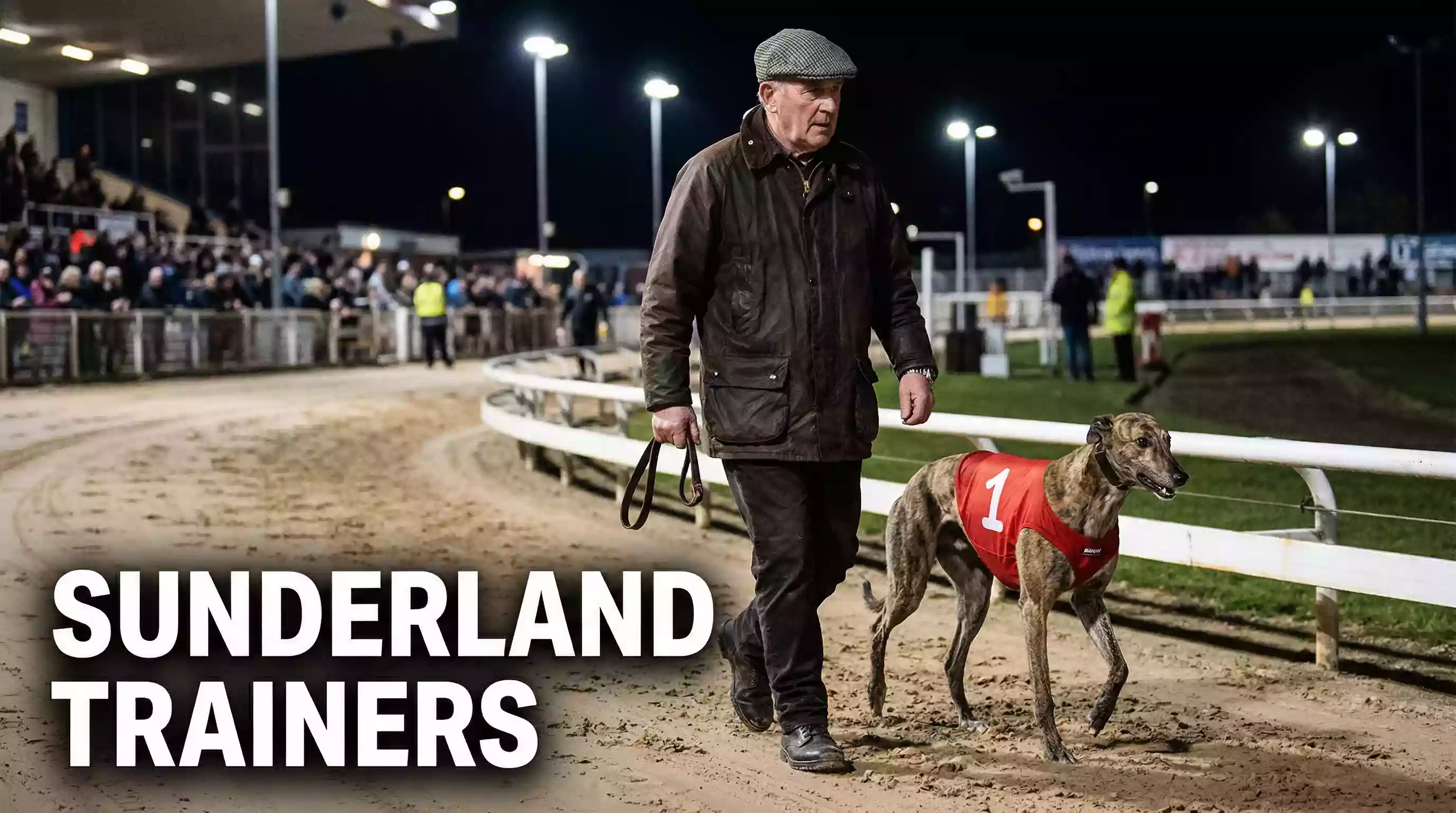
Trainer form is the most underused data point on a greyhound racecard. Punters will scrutinise a dog’s last six runs, calculate going adjustments, weigh up the trap draw — and then ignore the name of the person who prepared the animal for the race. That is a mistake. At Sunderland, where a relatively small pool of regular trainers dominates the cards, knowing who trains what can sharpen your reading of results considerably.
The UK has approximately 500 licensed greyhound trainers. Not all of them race at every track. Sunderland, like most regional stadiums, is serviced by a core group of local trainers who run dogs there week in, week out, supplemented by visitors from other tracks entering specific races. The regulars know the surface, understand the trap draws, and have their trialling routines calibrated to the track’s characteristics. That familiarity translates into results.
How Trainers Influence Results
A greyhound trainer’s job extends well beyond feeding and walking. The trainer is responsible for fitness programming, trial runs, race selection, kennel management, veterinary coordination and the day-to-day welfare of every dog in their care. A good trainer maximises a dog’s ability by placing it in the right race at the right time — matching distance, grade and track surface to the animal’s current form and running style.
Track familiarity is a significant factor. A trainer who has been running dogs at Sunderland for years will know, for example, that the 93-metre run-up on the 450-metre distance favours dogs with early pace from the inside traps. They will know how the sand behaves after rain, which distances suit which types, and how the Outside McGee hare affects running lines on different bends. That accumulated knowledge informs race entry decisions — and race entry decisions are one of the biggest determinants of results that never appears on a racecard.
Trialling patterns matter too. Before a dog races competitively, it will typically have trial runs at the track to assess its suitability for specific distances and traps. Trainers with permanent kennel allocations at Sunderland can trial their dogs frequently and adjust their training based on what the trials reveal. A visiting trainer entering a dog for a single race has far less track-specific data to work with.
Fitness management is where the best trainers distinguish themselves. Greyhound racing is physically demanding, and the five-fixture-a-week schedule at Sunderland means dogs can race frequently. Knowing when to rest a dog, when to push it through a busy stretch, and when to drop it down a grade for a confidence-boosting win requires judgment that only comes with experience. A trainer in good form — meaning their dogs are winning at a rate above their recent average — is usually a trainer who is managing their kennel well at that moment in time.
Race selection strategy is another dimension. A trainer decides which dog enters which race — and equally importantly, which races to skip. Entering a mid-grade dog in a Friday night A-grade race might look ambitious on the racecard but makes no sense for the animal’s development. The best trainers are patient, placing their dogs where they can be competitive rather than where the prize money is highest. Over a season, that patience shows up in the results: consistent top-three finishes, steady grade progression, and fewer races lost to trouble in running because the dog was outclassed in the field.
The relationship between trainer and track extends to the kennel infrastructure. At Sunderland, resident trainers maintain kennels on or near the stadium site, giving them daily access to their dogs and the ability to respond quickly to minor injuries, weight fluctuations or behavioural changes. A trainer based further away may only see their Sunderland dogs on race days, which limits the granularity of their management. Proximity is not everything, but it helps.
Key Trainers at Sunderland
Naming specific trainers and their current statistics is a moving target — leaderboards shift from month to month, and any snapshot published here would be outdated within weeks. What can be said is how the trainer ecosystem at Sunderland is structured and where to look for the data you need.
Sunderland’s regular trainer pool typically numbers between fifteen and twenty-five active licence holders who enter dogs on a weekly basis. Within that group, a handful of names appear on almost every card — the high-volume trainers with large kennels who might have four, five or six runners on a single meeting. These are the trainers whose form trends matter most, because they generate enough data to be statistically meaningful. A trainer with two runners a week does not produce a reliable form line. A trainer with twenty does.
Joanne Wilson, Sunderland’s General Manager, has noted that the stadium provides opportunities for visitors to meet the greyhounds and the people behind them — trainers included. On open-racing nights, particularly during Category One events like the Premier Classic and the ARC Grand Prix, the connection between trainers and their dogs is visible trackside. It adds a human dimension to the data that results sheets cannot capture.
Visiting trainers bring a different dynamic. A dog entering Sunderland from another track — Newcastle, for example, or one of the other ARC venues — will be less familiar with the surface and the trap draws. But a visiting trainer who has entered dogs at Sunderland many times before will have built up their own bank of track knowledge. The distinction between a first-time visitor and a regular visitor is worth noting when you are assessing an unfamiliar name on the racecard.
See also Greyhound Split Times.
Using Trainer Data in Your Analysis
The official Sunderland greyhound stadium website publishes trainer leaderboards that show win counts, strike rates and recent form for all active trainers at the track. This is the first place to look. The data is updated after each meeting and gives a reliable picture of who is running dogs well at any given time.
Sporting Life and Racing Post also carry trainer statistics, though the greyhound coverage is less granular than their horse racing equivalents. Timeform includes trainer identifiers in their form data, allowing you to filter a dog’s recent runs by trainer and spot patterns — such as a trainer who consistently gets results with dogs stepping up in grade, or one whose dogs perform better over specific distances.
The practical application is straightforward. When you are looking at a Sunderland racecard and two dogs have similar form, similar times and similar trap draws, the trainer is your tiebreaker. Is one trained by a name you recognise from the top of the leaderboard? Has the other’s trainer been in a quiet spell? Is one dog new to the trainer’s kennel — a recent transfer that may not yet be running to its potential? These are the questions that trainer data helps you answer.
The industry is investing in professional development that makes trainer quality easier to assess from the outside. In 2024, licence holders across the sport logged over 580 hours of continuing professional development — free training and education provided through GBGB. That investment in trainer education does not show up directly on a racecard, but it filters through into the standard of preparation, kennel management and race selection that the best trainers deliver. A well-informed trainer is, over time, a more successful one — and at a track like Sunderland, where the same names appear week after week, the compounding effect of that knowledge is hard to overstate. Sunderland Greyhound Trainers — More on this topic at sunderland greyhound results.
