
Responsible Gambling at Greyhound Racing — UK Support and Self-Help Resources
Best Horse Racing Betting Sites – Bet on Horse Racing in 2026
 Available in US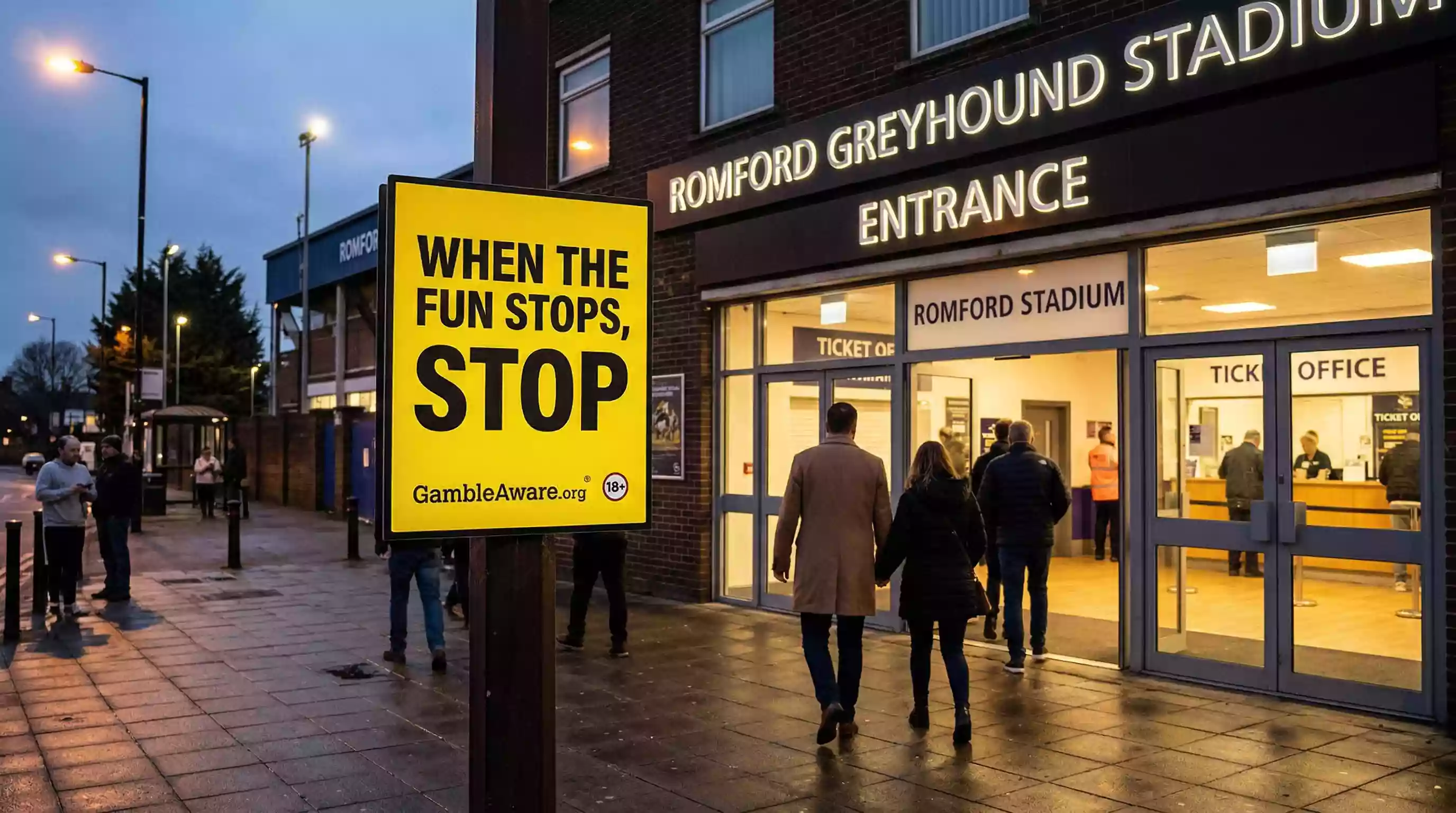
Greyhound racing and betting are inseparable. The sport was built around wagering from the day the first mechanical hare circled Belle Vue in 1926, and the betting market remains the primary funding mechanism for every licensed track in Britain. Bookmakers turn over approximately £794 million a year on UK greyhound racing. That is a lot of money moving through a lot of hands, and the pace of the product — a new race every fifteen minutes, with multiple fixtures a week at a track like Sunderland — means stakes can accumulate faster than in almost any other betting environment.
None of this makes greyhound betting inherently harmful. The vast majority of punters bet within their means, enjoy the sport, and treat their losses as entertainment expenditure. But the speed and frequency of greyhound racing create conditions where problems can develop quickly for anyone who loses control of their spending. This page lists the practical tools, organisations and strategies that exist to help — not as a lecture, but as a resource for anyone who wants one.
Setting Limits — Time, Money, Frequency
The most effective responsible gambling strategy is the simplest: decide your budget before you start and stop when it is spent. This applies whether you are betting at the track, in a betting shop, or online through an app. The budget should be money you can afford to lose entirely — money that, if it disappeared tonight, would not affect your ability to pay rent, eat, or meet any other financial obligation. If that figure is zero, the correct decision is not to bet.
Session budgets work best when they are specific. A general intention to “not spend too much” is not a limit — it is a hope. A specific figure written down or set in an app is a limit. Twenty pounds for a Friday night at Sunderland. Fifty pounds for a week of online greyhound betting. Whatever the number, the act of choosing it in advance — before the first race, before any outcome can influence the decision — is what gives it power.
Time limits are the overlooked partner of money limits. A twelve-race meeting at Sunderland lasts roughly three hours. That is a reasonable evening’s entertainment. But if you are betting online rather than at the track, the time boundaries disappear — there are meetings running at different tracks throughout the day, and the next race is always a few minutes away. Setting a session timer on your phone or using the time-reminder tools that licensed bookmakers are required to offer is a practical way to prevent an intended thirty-minute session from drifting into three hours.
Frequency matters too. Betting on greyhounds five days a week because Sunderland races five days a week is not a legal or moral failing — but it is a pattern worth examining. If the frequency of your betting is increasing, if you find yourself placing bets on BAGS meetings you would not normally follow, or if skipping a day’s betting feels uncomfortable rather than neutral, those are signals worth paying attention to. A pattern is not a problem until it becomes one, but catching it early is easier than catching it late.
Deposit limits on online accounts are the digital equivalent of the cash-only envelope. Every UK-licensed bookmaker is required to let you set a daily, weekly or monthly deposit cap. Once set, the limit cannot be raised instantly — there is a mandatory cooling-off period before any increase takes effect. Setting a deposit limit at the point of account creation, before you have placed your first bet, is the strongest position. Adjusting it downward later is always possible; adjusting it upward requires a deliberate waiting period that gives you time to reconsider.
UK Support Organisations
The UK has a well-developed network of gambling support services, all of them free and available to anyone who needs them.
GamCare operates the National Gambling Helpline on 0808 8020 133. The helpline is free, confidential and available seven days a week. GamCare also provides online chat, email support and face-to-face counselling through a network of local centres across England, Scotland and Wales. If you are not ready to talk to someone, the GamCare website offers self-assessment tools that can help you evaluate your gambling behaviour privately.
GamStop is the national self-exclusion scheme for online gambling. Registering with GamStop blocks your access to all UK-licensed online gambling sites for a period of your choosing — six months, one year, or five years. The block applies across the entire regulated market: once you are registered, no licensed online bookmaker in the UK will accept your custom. It is the strongest available tool for anyone who finds that willpower alone is not enough to control their online betting.
The Gambling Commission is the regulatory body that licenses and oversees all commercial gambling in the UK. Its website provides guidance on responsible gambling, links to support services, and a complaints process for anyone who believes a gambling operator has failed to meet its duties. The Commission requires all licensed operators — including every bookmaker that takes bets on greyhound racing — to display responsible gambling messaging, provide deposit limits and self-exclusion tools, and interact with customers who may be showing signs of harm.
Gordon Moody provides residential treatment for people with severe gambling addiction. The programme is free at the point of access and funded by the gambling industry through GambleAware. Referrals can be made through GamCare or directly through the Gordon Moody website.
See also Sunderland Dogs Results Yesterday.
On-Track Responsible Gambling at Sunderland
Responsible gambling is not just an online concern. At-the-track betting — cash bets placed with on-course bookmakers or through the tote — carries its own risks, particularly because the physical environment of a greyhound meeting is designed to encourage participation. The atmosphere, the pace of racing, the social pressure of being among other bettors, and the immediate availability of the next race all contribute to an environment where spending can escalate without deliberate intent.
ARC venues, including Sunderland, are required to display responsible gambling messaging throughout the stadium. Signage at betting windows, on race programmes and on digital screens directs visitors to support services. Staff receive training in identifying signs of problem gambling and are equipped to direct anyone who asks for help to the appropriate resources. This is not tokenism — it is a condition of the GBGB licence under which the stadium operates.
Self-exclusion from a physical venue is possible. If you want to prevent yourself from attending Sunderland greyhound stadium, you can request a self-exclusion through the stadium management. The scheme is voluntary on the customer’s side and binding on the operator’s side — once you are on the exclusion list, the stadium is obliged to refuse you entry. Attendance across ARC’s greyhound stadiums grew by five percent in 2025, which means more visitors passing through a betting environment, and a correspondingly greater responsibility on the operator’s part to ensure that support is visible and accessible.
The point of all of this is not to make greyhound betting feel shameful or dangerous. For most people, it is neither. A Friday night at Sunderland with a £20 budget, a few bets and a three-course meal is one of the best-value evenings out in the north-east of England. The responsible gambling infrastructure exists for the minority who need it — and the best thing the majority can do is be aware that it exists, know where to find it, and use it without hesitation if the need arises. Responsible Gambling at Greyhound Racing — More on this topic at sunderland greyhound results.
